

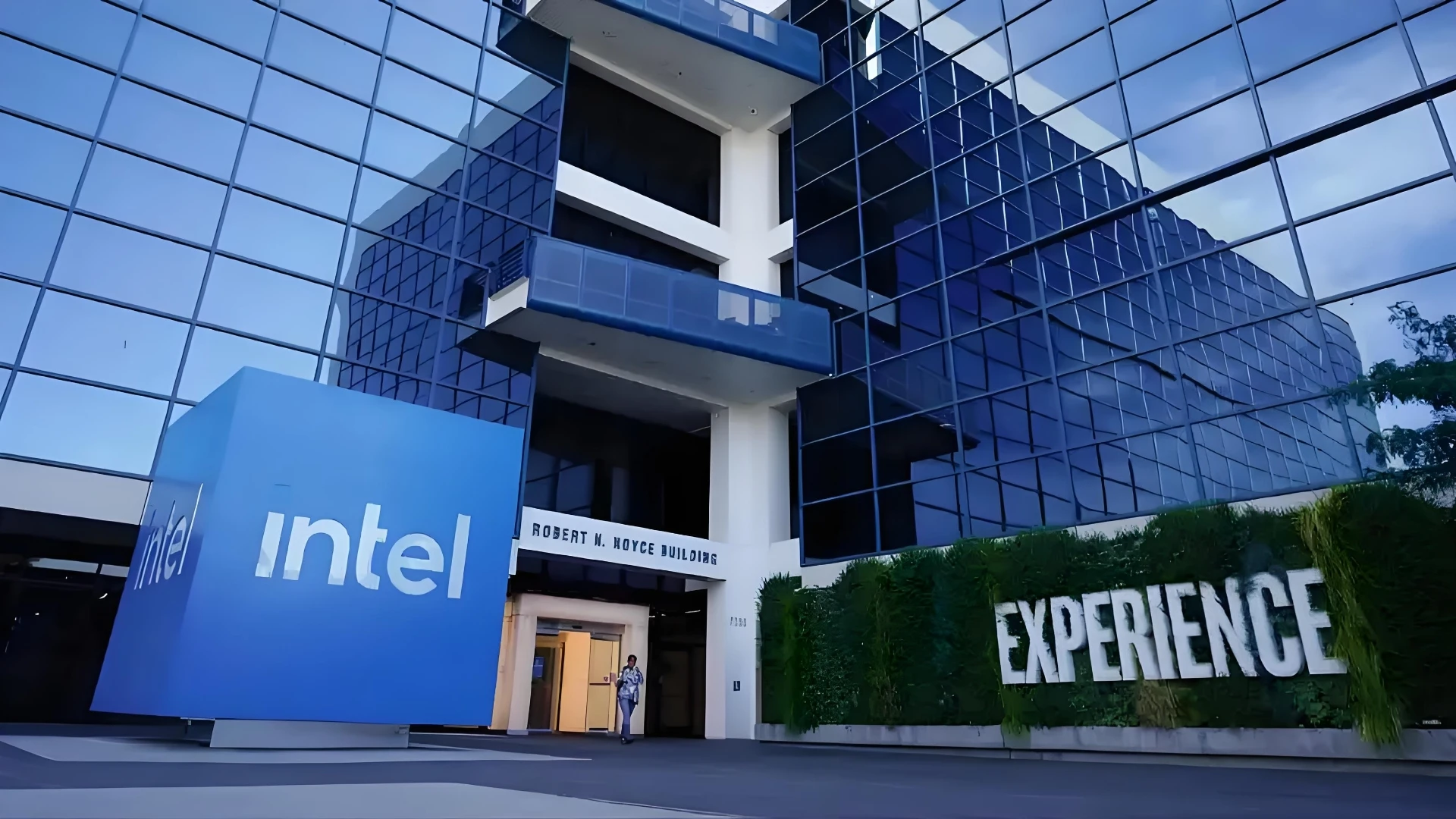
Intel Corporation (NASDAQ:INTC) beat Wall Street on revenue, earnings, margin and guidance in the second quarter and still reported a net loss of $11 billion.
The chipmaker posted revenue of $16.13 billion, up 25% year on year and its fastest growth in more than fifteen years, against a consensus near $14.42 billion. Adjusted earnings were $0.42 a share against $0.21 expected. Non-GAAP gross margin reached 41.8%, above management’s own roughly 39% guide. Shares closed Thursday at $100.23, traded as high as $112.70 after hours, and were around $102.53 in Friday’s pre-market.
Intel peaked at $142.35 in June and has traded well off that high, closing Thursday at $100.23 before a muted pre-market response to Q2 results. Source: TradingViewWhere the Growth Came From
The data center business carried the quarter. Data Center and AI revenue reached $6.3 billion, up 59% year on year and roughly 24% from the first quarter, as demand for server processors outstripped what Intel could supply. Client Computing and Physical AI contributed $8.9 billion, up 13%, taking total product revenue to $15.1 billion.
On the earnings call, management said AI-driven businesses collectively grew more than 70% year on year and now account for around 70% of revenue. Chief Executive Lip-Bu Tan attributed the quarter to execution rather than cycle, saying the results reflected “greater speed, accountability, and customer focus.”
Guidance extended the beat. Intel guided third-quarter revenue to $15.8 billion to $16.8 billion against estimates near $15.01 billion, with non-GAAP EPS of $0.38 against $0.24 expected.
The $11 Billion Loss Intel’s Own Rally Created
GAAP tells a different story. Intel reported a net loss of $11.0 billion, or $(2.16) a share, driven by a $12,529 million mark-to-market charge on what the company calls Escrowed Shares.
Those are 159 million shares held in escrow for the US Department of Commerce under Intel’s CHIPS Act Secure Enclave agreement, released as Intel performs and receives federal disbursements, priced at $20.00 a share. Intel classified them as a derivative liability carried at fair value, so movements flow through the income statement.
The consequence is counterintuitive and, usefully, forecastable. The liability is roughly 158.7 million shares multiplied by the gap between Intel’s share price and the $20.00 strike, which means about $1.6 billion flows through GAAP earnings for every $10 the stock moves in a quarter. The $12.5 billion charge implies a move of roughly $79 across the three months to 27 June, which is close to what Intel’s shares actually did. The better the stock performs, the larger the accounting loss. On a non-GAAP basis Intel earned $2.2 billion, with operating cash flow of $7.0 billion.
Investor Takeaway
The charge is mechanical: roughly $1.6 billion of GAAP profit or loss for every $10 Intel’s shares move in a quarter. With the stock down from its June close, the same rule points to a multi-billion-dollar GAAP gain in Q3.
Foundry Still Sells Mostly to Itself
Intel Foundry revenue was $5.8 billion, up 31%. External revenue was $293 million, up from $174 million the previous quarter, a 68% sequential increase off a very small base. Almost everything the foundry produces still goes to Intel.
The engineering has moved faster than the customer list. Yields on the 18A node have reached roughly 85%, up from 65% a quarter earlier, against TSMC’s N2 at around 90%. Apple and Microsoft are confirmed design partners, and Intel Foundry named Fortinet as an external customer on 23 July, hours before the results, its first publicly named commercial engagement. That gap between capability and external revenue is what separates Intel from a fabless designer like Marvell, which depends on TSMC precisely because no credible leading-edge alternative has existed.
Closing it costs money. Chief Financial Officer Dave Zinsner raised 2026 capital spending from $18 billion to $20 billion, with a meaningful increase signaled for 2027.
Why the Stock Gave Back Most of the Pop
Adjusted free cash flow was negative $8.4 billion. That number landed in a session where Alphabet sold off despite record earnings because capital spending doubled, and Tesla fell after free cash flow turned negative. The market spent Thursday discounting non-operational gains and pricing cash.
Intel’s own recent history sharpens the contrast. A comparable first-quarter beat produced a 23.6% move on the day. This one popped 12.4% after hours and has surrendered most of it.
Analysts split on the same numbers. Mizuho cut its target from $135 to $109 while keeping a Neutral rating; Wells Fargo raised its target from $110 to $120 at Equal-Weight. Wall Street entered the print on a Hold consensus of 22 holds, 10 buys and two sells, with targets running from $65 to $200. The backdrop is a semiconductor index in a bear market, down 22% from its high, which has also weighed on Nvidia and Super Micro.
Intel is now growing faster than at any point since 2011 and reporting billion-dollar losses because its shares went up. The operating business and the accounting are describing different companies, and the market spent Friday morning deciding which one to price.
Investor Takeaway
External foundry revenue went from $174 million to $293 million, and Fortinet is now named. Both are small against $5.8 billion of internal work, and both are the numbers that tell you whether the foundry thesis is converting.